From Burning Ants to Crushing Candies: Before the Smartphone Detox
Addiciton. Anxiety. Depression.
These are very much words of the twenty-first century. Growing up, I remember trying to burn ants with my magnifying glass, soaking conkers in vinegar overnight to make them harder, play fighting with friends, listening to my day-glo yellow Walkman. It’s a cliché, but times were simpler.
Then, at 17 years old, I remember getting my first mobile phone. If you were under 18, then the contract had to be in the name of a parent or guardian. I had to take my mum with me to the shop, much to my embarrassment. It was 1999.
Smartphone detox of course didn’t exist, because we didn’t have smartphones.
(Incidentally, under 18s still cannot get phones. Yet 68% of people said that it was reasonable to give a phone to someone when they have their 9th birthday. Some kids have phones as young as six, and social media accounts by the time they hit their teenage years.)
Since 1999, I have had five Nokias, three HTC and two Samsung Phones. The last 6 have been “Smart”. I say Smart because the first one, the N95, was a bit of a beast. It was a beautiful phone with a two slider that had the keypad one way and the multimedia controls the other way. It had a 5 Megapixel camera that was activated by manually opening the lens (which had a cover on it). It would take a full six seconds from opening to get the camera app up and be ready to take photos. But in 2007, it was impressive.
The Ipod that Made Calls!! (The Start of our Smartphone Obsession)
Incidentally, at the time the first iPhone had yet to be released. That came later in the same year, and was one of the first touchscreen phones. It’s interesting to note that even Apple didn’t see the future of smartphones as we know it.They definitely didn’t imagine that anyone would need a smartphone detox just a decade later.
In all its literature, Apple spoke of re-inventing the mobile phone. They wanted a phone that was in effect a multiple touch screen iPod. A device that could make calls without a physical keyboard or keypad, where you would type directly onto the screen, and so that you could listen to all your music too. Pretty cool, eh? A music player and phone combined.
As we know today, by launching the iPhone, the irony is that Apple destroyed the music player. It broke the iPod to build the iPhone. As forward thinking as Steve Jobs was, he envisaged a world in 2019 where we would be all calling and “musicalling” away, not a world where we would be hooked to social media and our apps, seeking recognition through likes and loves and retweets and shares.
I stuck with my Nokia 95 in those days, still hanging on to the keypad. Since then, in twelve years I’ve gone to an HTC Desire, then a blue HTC One (belatedly then called an HTC One M7), an HTC One M9, a striking pink Samsung S7, and finally a Samsung S9.
The colours may have changed and the cameras have improved light years, but they all have done pretty much the same thing – connect you to the internet and a multitude of apps, including social media.
The Dark Side (of the Smarthphone)
Despite the excitement of new phones and their convenience, there’s been a growing murmur to the dark sides of these beasts. A murmur which highlights why a Smartphone Detox could, and would, be a good thing for most people.
Of course, years ago we all thought they were frying our brains with their RF Radiation. Mobile phones were giving us cancer, and the networks were hiding it from us. Without long term studies to prove or disprove the theory, the debate raged and then went quiet. Cancer is too illusive to pin down to singular causes like mobile phones that have been around for less than a few decades. We all forgot about the cancer scares, or pushed them to the back of our mind.
And things were rosy. For a time. Phones got more powerful, and as they did, we reaped the reward. We learnt to love the algorithm. No longer did we have to see all of your friends in our modern, busy world. No, we could just Whatsapp them instead – multiple times during the day to find our every minute detail of their life. No longer did we have to go to the bank, we could just hop on our internet banking app. Check our money, transfer some here and there, and done within minutes. No longer did we have to call or visit travel agents. Nope. Just jump on flight comparison apps and book a flight in minutes, open up a hotel app, then the car hire. A full week in Lanzarote at a lovely villa with a car to explore the island – tick. Done in ten.
But then we started to notice that convenience had lead to addiction. Groups of friends sat around the pub table, all looking at their phone. The need to check and recheck your phone every five minutes, just in case one more person liked that post on Facebook. Procrastinating from activities, and work, to look at your Tinder profile, your Insta, and anything else that might distract you a little longer.
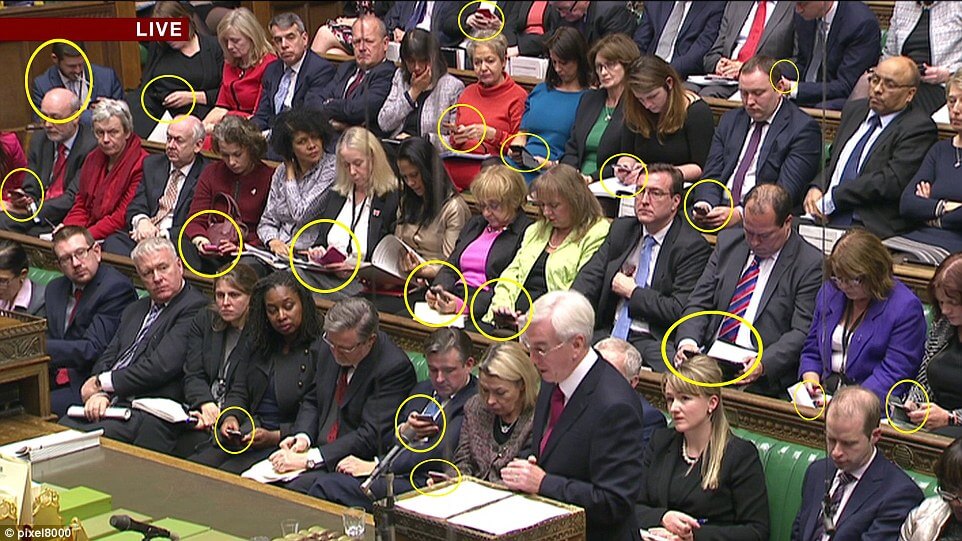
And if you think our friends are bad down the pub, you haven’t seen the politicians that should be running the country – see photo below.
The Even Darker Side
I started to see a few videos on Youtube and Facebook talking about the darker sides of smartphone use.
As much as we were shrinking into our screens, we were also being more open and vocal than ever. People were discussing mental health more than ever, a once taboo subject. The statistics were unsettling – 1 in 5 adults will have a mental health issue in their life. Suicide is the leading cause of death for men under 35. In fact, 1 million people each year kill themselves.
Friends around me were talking to me more and more about their anxiety. Some about depression. Most were on, or had been on, some form of medication for this. Supporters of the “sweep this kinda shit under the table and don’t mention it” clan would inform you that people are not more unwell today. They just talk more. And in the days of our parents and grandparents, you just had to get on with life.
I do believe that action leads to a reduction in mental health issues. I’m the first to admit I’ve been rather short, sarcastic and simplistic in my support of others. I’d say things like “it’s easy – just be happy”. While I do believe there’s an element of truth in this, my manner sucks.
There is something else at work here. In our modern day life, we are feeling more stressed and less motivated. Ironically, in a world that gives us access to infinite possibilities and makes it easier than ever to achieve our goals, we are unhappy. Mentally unhappy. Unwell. Sad. Without a clue of how to fix it.
Smartphones are getting the brunt of our problems with the current situation. The need to be in constant communication. The blurring of work and personal lives. The “comparativitis” that comes with seeing all your mates having what looks like, on paper, glorious lives.
The Man in the Mirror
So I started to think about my own phone use, which is harder to do. You really need to take a step back, as a lot of our destructive patterns seem perfectly rational and normal now. I knew one thing for sure. When I was busy, at festivals or on holiday for instance, I hardly used my phone. Except for recording my experiences with photos and video. There was no time. When I had days where I wasn’t busy, on the other hand, time was swallowed up by phone. I could lay in bed for hours, and the time I could have spent being productive on something else was gone. It felt like I had no time, but I had loads. I was just using it unproductively.
I picked up a copy of Cal Newport’s Digital Minimalism: Choosing a Focused Life in a Noisy World and read it cover to cover. He has some great points, though many were already known to me. One of the things Cal advocates is a 30 day smartphone detox. I decided to try it.
A Smartphone Detox ... and more
Finding time for a detox is difficult. Of course, it should be able to be done at any time. But with work commitments over Summer and constant Whatsapp messages coming through, I decided to leave it to the end of my working season.
I’m not advocating that you can’t detox if you use your phone for work. Just that it takes a little more thought. For instance, you can split your work and personal into two phones. Alternatively, if you work a set pattern like 9 to 5 Monday to Friday, you can turn your phone off after that and also not answer emails too.
For me, it was easier to leave it till I had no work commitments, then I set my ground rules.
From 11 September 2019, the day after I flew back from my last festival in Croatia, I would detox. For a full month. Some delete just the social media apps on their phone and don’t use these for a month. But I decided to go full-on cold turkey. No smartphone, at all, for one month. I wanted to use my laptop for work, as I would be writing, but I decided I wouldn’t go on
any social media on the laptop either. This would just be for work, research and email. I also decided to give up my TV and all movies for a month. The time I would have spent watching TV, I was going to spend reading instead. I also took a rent out at a co-working space that I would walk or cycle to every day, and I booked myself unlimited sessions at the local Yoga place.
My rules were set to have a month as away from technology as I could, and also concentrate on slowing down, and exercising well:-
- No Smarthpone
- No Social media at all
- Walk or cycle each day to work (6.5km)
- Go to Yoga
- No TV/Netflix/Movies etc
- Eat Healthy
- Read books daily
Dumb Phones - Our Saviours
In preparation for my smartphone detox, I decided to splash out and reward myself with a dumb phone. To the tune of £10.99.
Dumb phones are slang for what we used to call our old Nokias. Phones that can call and text, but have no or limited connectivity. They are more officially being called feature phones, but I prefer the term dumb.
I had decided that merely restricting myself to my smartphone was not an option. I wanted ideally to be without a phone entirely, but the need to be in some form of contact prevailed. In these days, many good friends do not have my phone number – Facebook messenger has seen to it that we are a generation without the need to have a mobile number, as long as you’re Facebook friends. However, I like having a line of contact to my parents, or rather from them to me, just in case.
I had settled for a Chinese manufactured phone that I had seen on Ebay. It had no manufacturer name, just simply named the M5. It looked like a calculator. Still, it had the basics – it made calls and had a tiny screen that you could text from. You could also Bluetooth it to any smartphone if you wanted, though that wasn’t my purpose here. Finally, it was the size of a credit card. So small you could put it in your wallet or even forget you had it in your pocket.
I pared down my contacts to 250 that I wanted to put on my SIM Card – the max a SIM card can take. Then I was ready.
Detox Day (D-Day)
Detox day – 11 September – came. The first thing I did when I woke that morning was transfer my SIM Card.
Okay, you’ve got me. The first thing I did was check my Facebook. Then my Instagram. Whatsapp. Facebook Messenger. My Dating Apps. Then I transferred my SIM Card.
I turned on my M5, charged and ready. All the contacts were in the Phonebook. It was on. It was strangely beautiful. Then I noticed it said emergency calls only. I was stumped.
It took some time of Google researching (on my laptop) to find the problem. Many dumb phones run on 2G, which the seller of my beloved calculator M5 had failed to mention. My phone carrier is 3 (three). As the name might suggest to you, they came into the UK market to launch 3G, and whilst they used to have a contract with O2 to use their 2G network, they no longer do. My SIM Card and Network were too “smart” for the dumb phone.
It’s useful to note that should you want to follow suit and go “old-skool”, many 2G networks are being turned off and have become obsolete. 5G is coming and it won’t be many years before 3G networks as well will bite the dust. At least commercially, so as my Mum says the governments can get back to using the bandwidth for top secret military missions. Hopefully the dumb phones will get smarter too, in the case of their network range and choice.
It was time to go to Plan B.
I had an old Nokia 6303 that I used for festival work. It charges once and then it’s good for a week, and I’ve never had any problems using pay as you go SIMs from any network in it. So I put in my SIM card, turn it on and…. restrictions apply. Yep, my 3 SIM card doesn’t like the old Nokia. Or the old Nokia doesn’t like it.
I was left without a phone for three days.
The Banana Phone
I eventually got a phone, deciding to fork out £28 on a refurbished Nokia that was almost a dumb phone, but capable of 4G. It’s a Nokia 8110, otherwise known as The Matrix Phone or the Banana Phone.
Originally used in 1998 for the Matrix, it was an iconic phone. Cool and futuristic, you could answer phones at the push of a button that released the keypad. Of course, in the Matrix, it looked like Neo and Morpheus’ phones did it automatically, and for a while they were all the rage.
They re-released the phone recently, with a choice of black or bright yellow. Since the are curved, hence came the name – the Banana Phone.
It’s strictly not a Dumb Phone, being capable of internet and having an App Store. It has a fiddly Google Maps and Google Internet too, but they’re so painful I didn’t waste my time with them. I also couldn’t get the App Store to load as it kept asking for an Update, which is probably a good thing.
You can also hotspot off it, which is a nice touch, and as I mentioned it picks up 4G. So my SIM card had no problems.
Oh, and it has Snake.
Not the original one unfortunately. Snake 2 is not as fun – you move in all directions rather than the classic up, down, left and right. But it’s Snake.
On Day 4 of my Detox, the Banana phone turned up. Finally, after much aggravation, I was ready to roll with a dumb phone that worked.
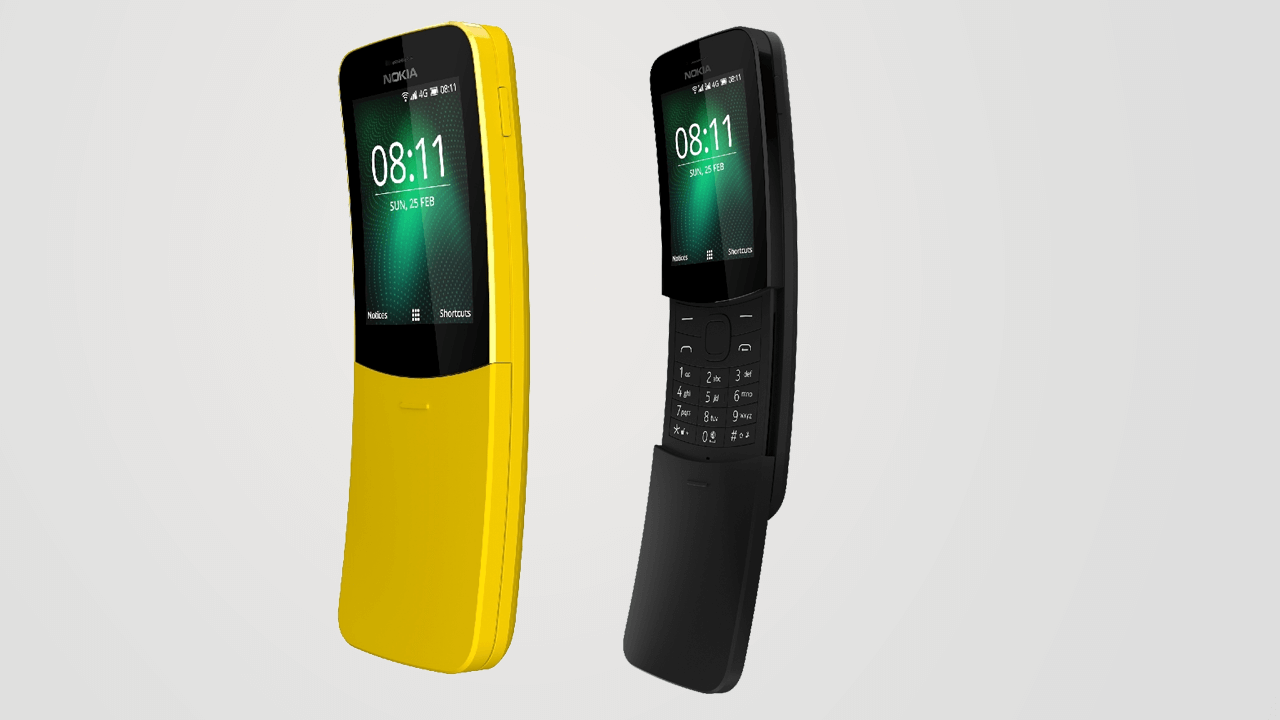
Nokia 8101 "Banana Phone"
These are the Hardest Days
Everyone says the first few days of a detox are the hardest.
Mine were blissful.
After failing to get a phone to work, I didn’t put my SIM back into the smartphone. I just chucked the smartphone into a draw, and the SIM on one side of the table waiting for the banana phone to arrive.
For three days, I left the house without a phone. You know the trifector of keys, wallet, phone. For me, that just became just keys and wallet.
Did I miss it? Yes, and I had some issues, especially on the second day (see below). But I was determined not to fail at the first hurdle, so by the time I hit Day 4, it felt good.
So Long Facebook
The first thing that faded after a day or so was the need to check social media. In fact, of all the things I miss most about my phone, Facebook and Instagram are bottom of the list. Sure, give me a smartphone and I will spend hours on both of them if left to my own devices. But give me a day without, and somehow the need to know what everyone is doing simmers. And then about three days in, it disappears.
If you’re one of those people who are constantly thinking about what to post next on your social media, take it from me. It’s exhausting. You know that feeling when you look at something and you think – this photo will be really good on Facebook. And I can add a filter and put this as the caption, and people will like it.
Then you start debating with yourself for five minutes about what caption to put, and should it be longer or shorter. Oh, but you put something similar to this up once, and not many people liked it. So maybe you should take a slightly different angle with this one. Oh and hash tags would be good – need a combination of funny and serious hashtags. So then you spend time thinking about hashtags.
Before you know it, you’re now thinking about tomorrow and what to post tomorrow. And what you’re doing for the next week. And on. And on.
If you do this, or anything similar (or even in small dosage), it’s exhausting. It takes up so much of your time. It takes up your brain power, even if you don’t notice it. Then you worry and you post it and you worry more. What happens if you don’t post? Absolutely nothing. Well, you’re a little saner.
Love and Hate, Together Forever
One of the biggest learns for me is that I love and I hate posting to social media. Gone are the days when you could whack up a picture of a beach and loads of people liked it. Now we seem to be all competing for everyone else’s attention, and we all have less of that than before. But I also love sharing and creating, so there’s a balance here that I haven’t figured out.
Content Creators and Influencers – I hate that word – in particular rely on social media. The question is can you feasibly in this day and age not use it? That’s a question I haven’t answered yet, so I will let it fester on the drawing table.
Did I miss seeing photos and updates from friends? Yes. But I preferred the quiet and peace more. It would have been nice to see them, but not at the sake of getting entangled in the game of Dopamine hits again that likes and comments on social media feed into the brain.
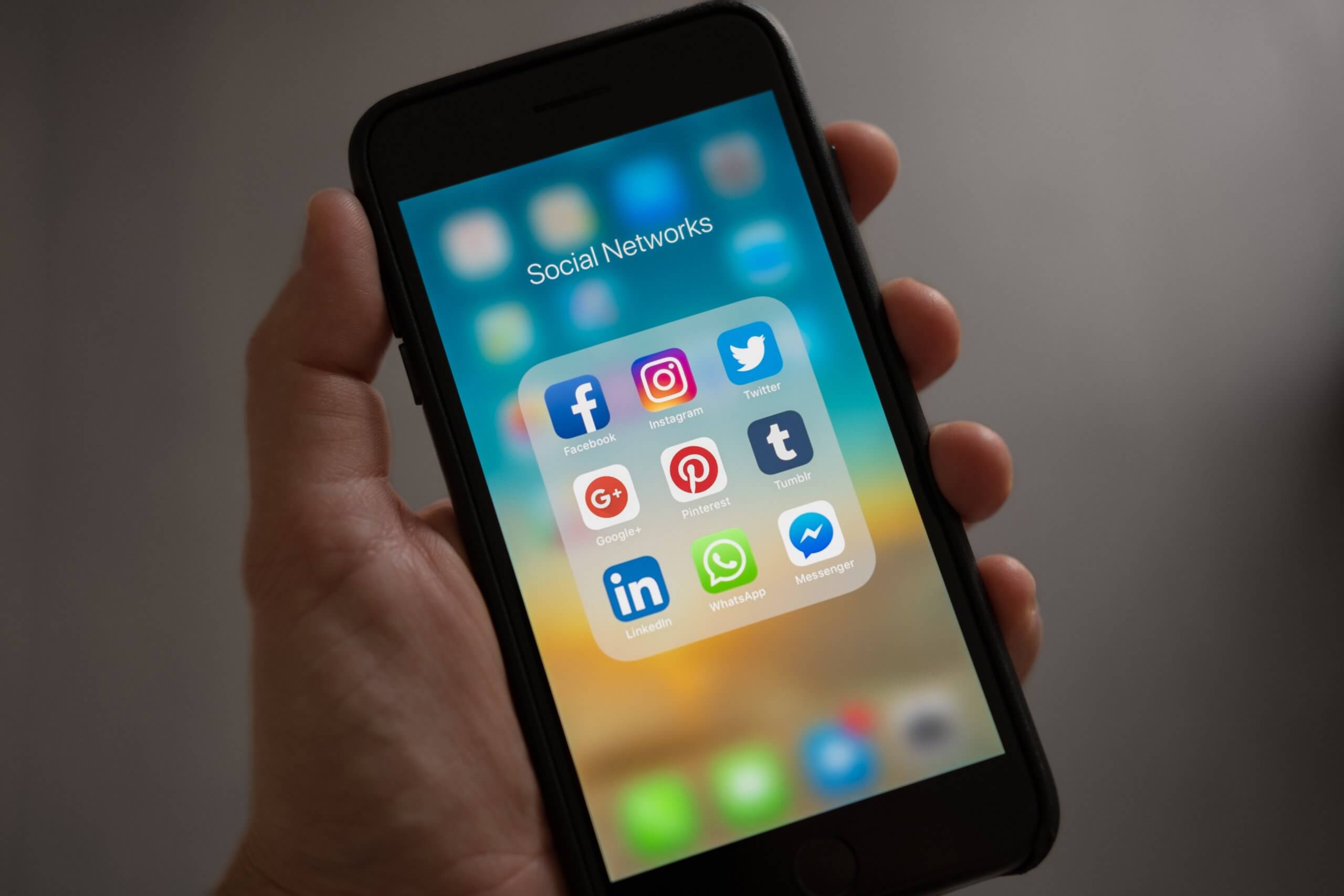
The Chaff
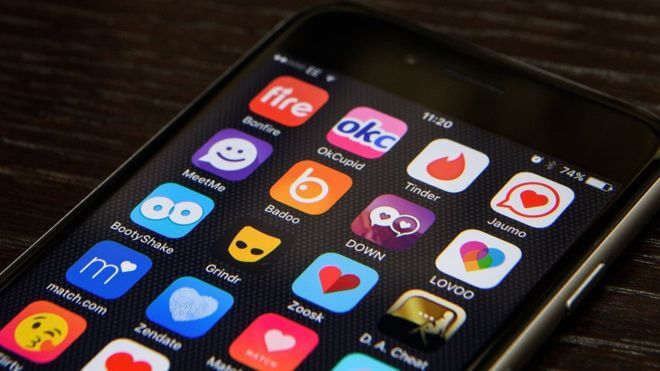
If Social media is the chaff that deserves to be removed, then what else is in this category? In a short answer, dating apps.
I have on and off dabbled in dating apps and at the time before detox, used Tinder and Bumble. At around Day 2, bored and unable to go on a smartphone, I realised that both have websites that fulfil the same functions as the Apps do.
And you know what – they’re boring.
I realised that dating apps are games. The reason they are addictive is because the size and flickability – yes I did make up that word – of a smartphone make them so. Flicking left and right, and getting matches is akin to getting likes on Facebook. It’s a Dopamine fix, however short. I don’t think it even matters whether you find the person giving you a match attractive. It just says – “I like you and you’re pretty cool”. It’s an affirmation. No wonder we ghost people, or don’t talk to our matches. We’ve had the ice cream lick, who cares about the effort to eat the stale cone?
On the computer, somehow all this functionality is gone. I would do maybe ten “flicks” then give up.
Games, dating apps and social media are real time drains without, I believe, much gain. We may think we are getting gains but our mind is playing with us so it doesn’t relinquish its addiction.
Please Sir, Can I have Some More Wheat?
Yes there is, and 30 days without a phone has made me realise how useful they are. I could definitely live without one, if pushed to, but I do take a lot of use from them.
Not having them helps you separate the wheat from the chaff.
My first problem came on Day 2 of my Detox. For many years I’ve used Google Maps on my phone in the car for my main navigation. That day, I had an interview in London, and having a good sense of direction and some knowledge of London, I had a quick look on Google Maps on my laptop before setting off.
It was hard to get there, and I managed it, but felt the loss of not having a backup to glance at just to make sure I was still on the right track. Disaster struck when I got there, however. I had booked a car parking space on the JustPark App weeks before, and I had no idea where it was or how to access it. Many of the spaces require instructions to use, such as keycodes to get into places. Luckily, this was just a manual barrier, and after a few wrong turns I found the right road and the right space.
The Inconvenient Life
The next day I struggled to log into my online banking. On a phone, it’s easy. With a laptop, however, it asked for a passcode that I hadn’t used in years, and I didn’t have the answer. I looked for ways around it and eventually gave up. I opened my smartphone but only to get into the phone app, where I could then change the passcode without knowing the original one.
The day after that I wanted to talk to Cowon about my MP3 Player I bought from them last year. It had been fulfilled by Amazon, but Amazon were being difficult. There was no option to return the item on the website as the order had been made too long ago. Trying to resolve the issue on my laptop, Amazon kept needing to text my phone a code to log in to get an online chat going regarding the item. Every time I logged in with the code, I couldn’t access the chat. It was infuriating. In the end, I gave up and turned on my smartphone.
Within five minutes, I’d spoken to an advisor, arranged a refund and got instructions on how to send the item back.
There were other problems during the month. Many are a distant memory, some I’ve forgotten entirely. There were also times where instead of being a problem, life would just have been easier with a smartphone.
Who Ate All The Cake?
For instance, around week two I tried to get better at what I was eating. You have to keep a log to really knuckle down and retain some momentum around your food goals. Normally I would use My Fitness Pal for this on my smartphone. Instead, I resorted to writing them on a small notepad. It was frustrating.
Additionally, I realised how much I put down quickly in Samsung Notes. Reminders of things to do, or items I need to look up. Not having access to a “digital notepad” left me feeling disorganised.
The good ol’ Banana Phone had a notes feature. By this point, I was loathe to write anything on there. Going back to a numeric keypad for texting seemed like it would be fun. I remember how much fun it used to be double and triple clicking buttons to send a text.
Clearly, my memory has been lying to me all these years. It was painstakingly slow. By the second week, I had stopped texting almost everyone.
But then a week in Madeira on holiday made me realise how much smartphones have made things easier.
The Only Way to Travel Is Smart
Over the years, we have become smarter in the way we travel and the smartphone is an extension of this. You can book the world through your fingertips.
Flights using airline’s own apps, online travel agents and flight comparison sites like Kayak, Skyscanner and Google Flights. You can jump on Hostelworld, Couchsurfing, AirBnB and Booking.com, amongst others, to find accommodation anywhere and pretty much everywhere. Google translate will help you with phrases, Google Maps will point you in the right direction, Duolingo will brush up your language skills and Tripadvisor will help you find the best places to visit, and tips and reviews from others.
In short, the smartphone is miraculous. It makes travelling easy.
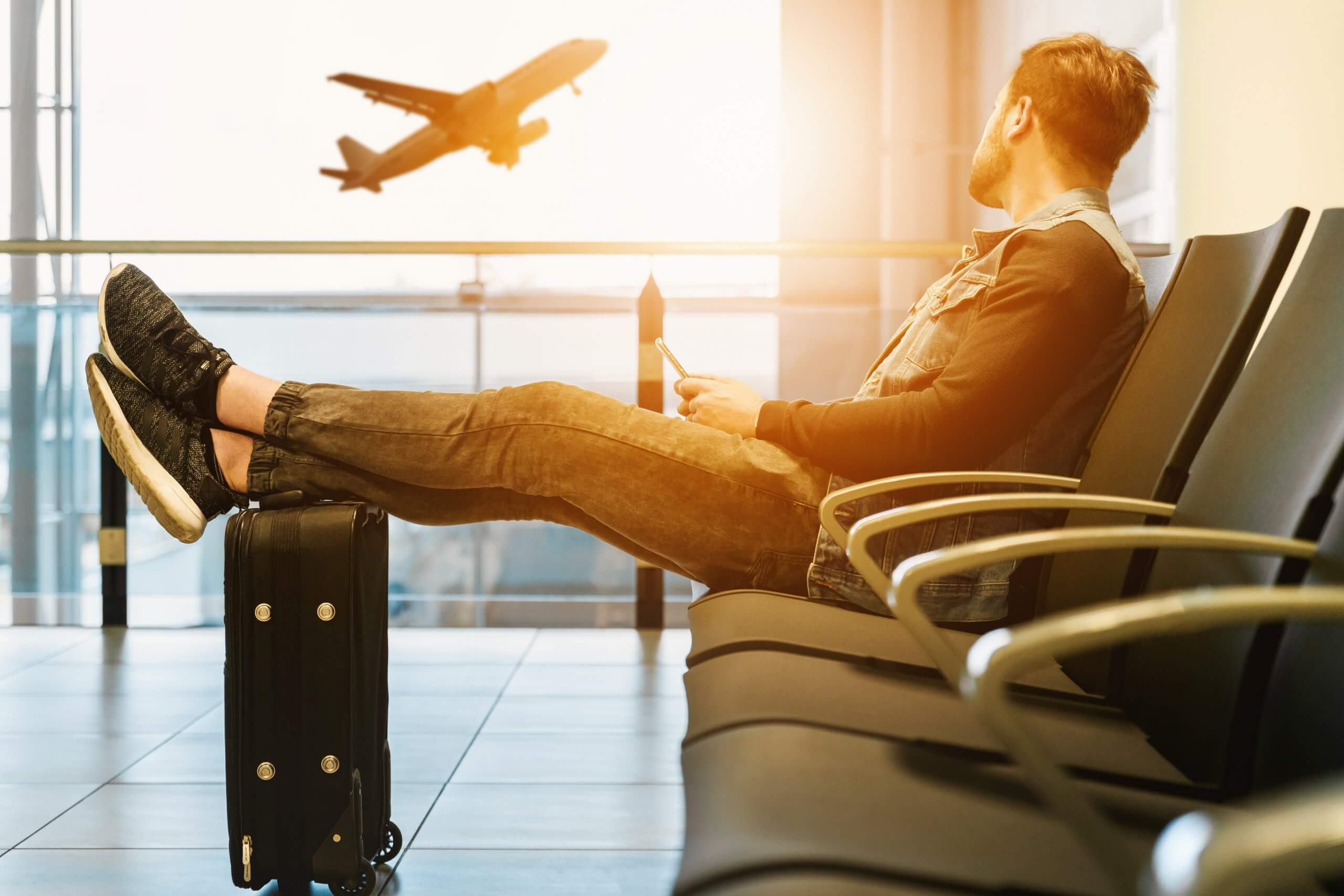
Not so for Madeira. I would normally have all my confirmations on email and phone ready to go, and boarding passes in my screenshots. For Madeira, I had to print off the car rental info, the boarding passes, and the accommodation confirmations. Not only did I feel like a dinosaur, I also felt bad about wasting paper.
Then on the first day, when we couldn’t get into our accommodation, my friend basically shouted at me for not having access to a smartphone and the booking.com app. Navigating around the roads of Madeira also proved to be a heartache. I got the lay of the land in the end, but a few of the roads made no sense. My best friend snubbed and sneered at me every time I asked her for use of her smartphone.
We got there in the end, but if there’s anywhere I think a phone is priceless, it’s on the travelling circuit when you’re away from home and having an encyclopaedia in your pocket is kinda the coolest thing ever.
God Damn It - I'm a Photographer, Not a Doctor
I haven’t talked about photos at all. One of the only reasons I bought a Samsung S9 was for the camera. I rarely take another camera anywhere, and I love both taking photos and being able to do it easily with a cameraphone.
There’s no other way of putting it. They are so good.
Strangely, I didn’t miss my camera as much as I thought. Going on holiday I took my Sony Camera and used it for the first time. In other words, by not having a smartphone, it forced me to get to grips and improve my skills of photography. I also took my GoPro and it allowed me to get better at using that too. Both were completely unexpected side effects.
One of the big draws of having the photos on a phone is to be able to post them on social media. Not having that distraction meant I didn’t mind the time to have to upload the photos from SD card to a Laptop, then have to go through them.
I did however miss my Drone. I fought back and forth with my mind whether to take it on holiday. But I decided to drone meant also to have a smartphone to view the flight and control it. And that would mean I would be tempted to use it for other things, like sat nav and not being shouted out by my friend for not having the booking.com App.
It was the one thing I thought I’d miss the most, but I missed it much less.
The Final Countdown
The 30th day came on holiday. So I actually didn’t have a phone, and it was 33 days without one before I picked one up for good. I didn’t mind these extra days in the slightest.
By this point, I had forgotten to take out my dump phone a lot of the time.
I had started to really notice other people’s behaviours on phones. When you have one, it feels normal. But when you don’t, it’s a different ballgame.
People spend so much time on their phone. I would walk down the street and realise people were not noticing their surroundings and almost walking into people. I would sit in restaurants and notice people constantly on their phones, rather than enjoying their food. And it’s not for useful stuff – it’s just for absolute s**t.
You do feel a bit like you’ve escaped the matrix. It makes you a bit smug.
The Blue Pill, or the Red Pill
In the movie The Matrix, Neo (our hero) is given the choice to escape the illusion by taking the red pill for a life of harshness and truth, or take the blue pill for a life of illusion but blissfulness.
So the ultimate question, I suppose, is have I given up my smartphone and taken the red pill?
The answer is no. I’ve taken the blue pill, retreating into the illusion of security and togetherness.
I think that there are many useful, convenient and time improving applications of a smartphone. This is what I seek to keep. The ability to satnav, internet bank, book travel plans, take photos and so forth. Things that actually save you time in comparison to how we do things.
But then there’s the time drains and the Dopamine Apps. The things like social media and dating apps that give the illusion of happiness but ultimately, when used wrong, sap our energy and soul. These things I would like to tame. I would like to limit my time on these so I can spend more time on what matters – seeing friends, being outside, learning new skills.
Finally, there are apps in the grey areas like Whatsapp and Facebook Messenger and emails. They can be great tools. They can also be further drains.
There is no point just chatting away about everything and nothing. Furthermore, nothing is as urgent that it needs an email. Check it a couple of times a day, then tune out. For messaging, they should be ways to connect, but we also need to meet and talk and laugh in real life. These apps should facilitate that. If you wouldn’t see somebody for a coffee, cut them out of your messaging world (unless they serve another important purpose). And for those that remain, it’s about quality conversations not quantity.
Digital Moderationism - A New Religion
To this end, I’ve developed a theory of digital moderationism. We seem to be a culture of two extremes now. The digital maximalists – for want of a better word – you glug smartphone use, clocking up the hours, and gorge on social media without a care in the world.
Recently, there’s been a drive in digital minimalism. People who detox and give up their phones for good. Others who delete most of their apps and just use one or two things. For me this is like dieting but only eating vegetables.
I’m working on what I think is a third way – using the maxim of “everything in moderation”.
I don’t want to cut out my phone, even though I enjoyed my 30 day breakup. Because it feels like giving up. It’s not how life works. You can’t just ignore it. The skill for me is learning how to tame the beast. Acknowledge it, utilise it but control it. This is the truest goal.
Maybe it’s the red pill and the blue pill together. Maybe it’s trying to have your cake and eat it. But it’s what I’m going for, and to its end I’ve set some rules.

The Rules of the (not so fun) Game
- Notifications for all apps to be told off – except call and “normal” text messages
- Office hours of 9pm to 10pm each night. This is to use and browse social media and talk on messaging apps (and whatever else I’d like to do with my phone)
- Social media for the rest of the day to be contained to posting content only (no browsing)
- Whatsapp and FB Messenger to be checked sparingly through the day (but if I decide it gets too much it will be limited to 9pm – 10pm only)
- No phone use after 10pm
- No phone in bedroom after 10pm (it goes on charge elsewhere to prevent distractions)
- Other apps to be used when needed but not excessively
- 2 Hours Phone Use maximum per day (excluding Satnav, Music playing and Pokemon Go – sorry but I love it)
- 1 Day off a week completely away from a smartphone (I’ve decided to make this Sunday when not much happens in terms of social media, but may extend this to 2 days off a week if this goes well
I’m also using a cool little app at the moment called Forest (free on Android but about £2 on Apple) which is uber cute. You grow trees. If you look at apps then you’re tree withers and dies. So the aim of the game is to grow as many trees as possible in your grove by not being on your phone. More trees equals more coins, which you can use to unlock different kind of trees.
Now It's Your Turn to Escape the Matrix
There’s not much left to say, except to wholeheartedly recommend the experiment to you. At the worst, you’ll have a month off your phone and learn to enjoy some time away from one less screen in your life; your TV and computer screen is probably more than enough already. At best, you may make goals to be happier and less stressed in the long run.
You’ll definitely realise that in many ways we have been pushed into communication ways and technology that we didn’t go into with our eyes open. You’ll be able to see the distractions in others. Our mobile has become our boredom alleviator. It has become our way to not feel alone in a crowded place where we know no-one. It has become our safety blanket where fear, hesitation, or nerves would get the better of us.
Left with your own thoughts, good things will happen.
Dare to be alone and Afraid.

Further Resources
Click on each tab below for resources to plan your trip
- Support
- Books
- While most of this article is fairly light hearted, many people do suffer from mental health issues caused from, or due in part to, mobile phones
- If you need any support, Mind is a fantastic UK based mental health charity - find them at https://www.mind.org.uk/
- For a good read on Digital Minimalism, check out Cal Newport's book and find further information at https://www.calnewport.com/books/digital-minimalism/
- Matt Haig's books Notes on a Nervous Planet and Reasons to Stay Alive are interesting but quick reads - check out http://www.matthaig.com/