Why do you need tips to sleep better?! Well, personally I’ve never been one to sleep instantly, but in recent years a combination of back and knee pain has exacerbated the issue. The global situation over the last year has been the nail in the coffin, as I would often lie awake with varied and never-ending thoughts cycling through my brain for hours. It has sent me on a mission to find how to sleep when you can’t, and the following is the best 10 tips that I’ve found and practiced.
Why Should You Worry About Sleeping Better?
Scientists don’t understand a lot of the intricacies of sleep. We are beginning to realise that it plays a huge part of wellbeing, as much as other critical subjects like health and exercise. Most people need around 7-8 hours of sleep at night to function well. Some say they can survive on much less, though this is a very individual need and research suggest there may be some genetical behaviours that allow certain people to do well on less. They are the lucky ones. For most people, we need those hours, and for all people, disruption to getting to sleep and in sleep itself can wreak havoc on our natural, daily rhythms.
Lack of good sleep has been shown to effect hormones, exercise performance and brain functions. Even worse, it can lead to weight gain and increased disease risk.
27 Years of Sleep!
Not only should we realise the importance of sleep from a biological standpoint, but we also spend so much time asleep that this should increase our desire to make it successful.
The Office of National Statistics found between 2017 and 2019 that the average age of death in the UK is 79.4 for Men and 83.1 years for Women. Sorry men, we don’t have it good there. We spend a third of our life asleep, which equates to 237,250 hours or 9885 days or 27 years.
It’s sobering when you look at it. Of our 81 years, only 54 years will be conscious. The other 27 years will be in the land of nod.
There’s two things we can do. One option is to try to sleep on less – almost to cheat death to get more time – which many people cannot do to function healthily. Furthermore, research has shown that by sleeping less you could in fact be jeopardising a long life. The other thing that we all can do is improve the time we spend asleep and get there quicker, and that’s where tips to sleep better really shine.
Isn't REM an American Rock Band?: The Sleep Stages Explained
Before we dive into an array of tips to sleep better, let’s briefly punch home this need to sleep well by explaining the sleep cycle in its simplest form.
Sleep Occurs in 4 Stages; 1 and 2 are light sleep, 3 and 4 are deep sleep. During the night, we cycle around these 4 stages in a loop. The first 3 are classed as N.R.E.M and the holy grail is Stage 4, otherwise known as R.E.M Sleep.
Stage 1 is very quick, maybe a few minutes. It’s the drowsy part of sleep, where you can access the environment around you. For instance, you can still hear things. It’s also the point of sleep with twitches.
Stage 2 is around 50% of your entire cycle. Things start to get slower, and you’re more asleep. Let’s be honest though – it’s a bit of a waste. If you could ditch the light sleep, and sleep for 4 rather than 8 hours, you probably would! But that’s an impossibility.
Stage 3 is 10-25% of your cycle. The deep sleep is where the good stuff happens. Your breathing, heartbeat and brainwaves slow to their minimum. Conversely, its also the stage that people will suffer from sleepwalking and night terrors in. Basically, you want 2 hours of deep sleep a night.
Stage 4 is R.E.M. It’s Rapid Eye Movement sleep as the eyes move rapidly under the eyelids. This is the dream stage, and the stage where new learnings from the day are committed to memory. Deep Sleep is linked with memories being categorised, physical recovery, immune system recovery and brain detoxification. Incidentally, antidepressants cut R.E.M sleep in half, so not a great long term solution for a healthy life.
Here’s the kicker with R.E.M. We want 20-25% of our sleep in it, a very healthy amount would be just shy of 2 hours. But our first R.E.M of the night is only about 10mins. As our sleep cycle goes on, each new cycle increases the time in R.E.M.
This means that by sleeping 4 hours we don’t just halve our R.E.M form an 8 hour sleep. We actually pulverise it. Which is why you need to sleep for the right length of time. Furthermore, you don’t want to keep waking up. You want to be asleep quicker, through the stages of light sleep quick, and maximising your deep and R.E.M Sleep.

10 Tips To Sleep Better
The following 10 tips will help you sleep better.
Whilst not a definitive list, they are the best ways I’ve found and tried to help create a better sleep cycle.
1) Wake Up & Go to Sleep At Set Times
Modern day life has messed with our circadian rhythm. This is an innate response from our body that roughly measures life into just over 24 hours. All of which is pretty handy since we have a 24 hour day!
We don’t know everything about why we have one, but we know it helps in an evolutionary sense. It’s a body clock that allows us to be up at the same time as everyone else, hence able to look after our offspring, find a mate, get food when we can see it and chase it and hunt it, and then sleep to repair the body when it’s dark. It means that on a normal rhythm we are at our most alert in late morning and at our most co-ordinated in the afternoon.
It’s biological and it’s not going anywhere for a few thousand years, until maybe we’ve messed it so much that we create mutant non-circadian babies that can take night jobs and never sleep. Maybe.
The biggest thing you can do to help the rhythm is routine. Have a wake up time and a go to sleep time. Preferably, its better if its an early wake up (say 6am-7am) because this helps with light that also affects our rhythm (more on that later). And, as much as I wanted to put Wake up at 6am as a point, I haven’t. Why? Because everyone has different lifestyles and some people find this very hard. Some people do have slightly warped rhythms where they seem to function better later on in the day. Others have irregular work patterns.
But, and its an important But…. if you can stick to a time to wake and a time to sleep, do it. It will be the single biggest drive for your body to want to sleep, and if it’s the only thing you pick up from tips to sleep better, it should be this!
And yes, that means on the weekends too (or your non-working days). I know that sucks. But even a day or two out of the groove will throw you off. It’s one of the reasons waking up on a Monday is so hard after that Sunday lie-in.
A final word: forget the naps. While there are some benefits in studies to taking naps, this appears to be with short naps (I call them snappy naps) below 20 minutes. Also, the later in the day you take them, the more it effects your sleep pattern. That 1 hour nap is not doing you any favours so save it and power through to bedtime.

2) Keep the Bedroom for Sleep Only
The NHS sum it up perfectly here in some of their best writing ever – “keep your bedroom just for sleep and sex (or masturbation).”
You heard the health people. If you ain’t sexing it up or unconsciousness, it has no place in the bedroom.
Of course, this poses problems for teenagers and people like myself that live in a room. The bed becomes a place to sit on laptops, watch TV from, play with phones, or just relax. But this has the disadvantage that the mind doesn’t relate the bed just to sleep.
Environmental design of our bedroom is one of the biggest things we can do to train our mind to associate our sleep with it. If space is limited, then try to have different parts of the bedroom with different purposes. For instance, a desk for work and a chair to watch TV or use your phone.
It’s not easy but it will have considerable subconscious repercussions.

3) Go Outside & Exercise
Yes, I know, I know. Getting outside seems to be my answer for everything but let me explain.
A factor of the Circadian rhythm is the release of melatonin. In the evening, and when it’s dark, the body releases melatonin. This makes you sleepy and helps improve your sleep cycle. In the day, melatonin production stops and you feel awake.
Getting outside completely halts the melatonin production. It allows the body to say to the pineal gland stop the production! It’s why many people recommend staring at blue sky upon waking to feel more awake. Humans were historically, like the natural world, outdoor organisms.
Going outside increases the disparity between light and outdoors and dark and indoors, and therefore sleeptime. A clinical trial in 2003 showed that 2 hours of exposure to light outside increased sleep efficiency by 80%!
Exercise not only helps us sleep better but it is physically knackering, meaning by the time we reach the evening we will be more tired and want to sleep more.
One small note on exercise. Vigorous exercise actually hinders sleep so should not be done in the evening. A run after work is better than nothing but after 8pm is regarded as a “no-no” and data suggests anything 6 hours before bed can still have a detrimental effect!
Fun fact: Sex is the only vigorous exercise that makes us sleepy. Women especially will testify to men dropping off after bouts of passion. For some reason, it’s hard wired in our biology. That’s for both sexes incidentally. So if you need exercise before bed…. You know what to do.

4) Get the Tech Out of the Bedroom
I alluded to this above. Phones, TVs, Tablets, Laptops… get them out of the bedroom as they disrupt the association between what a bed is and what you should do in it. Again, if you can’t then have spaces that you use each of them in.
There is a bigger problem though, and it’s about when we use them. Going back to our whole melatonin cycle, you’ll see light in the day is great. Conversely, light at night is no good. It can mess around with the production of melatonin, and blue light is particular bad – think TVs, tablets and phones.
Many people watch TV before bed and have TVs in the bedroom. Heck, I’ve even had two ex-girlfriends who fell asleep to TV (one to Disney films and the other to crime series, if you have to know). But it’s not good for you and I applaud anyone that can do it and sleep well. Ditching the TV from the bedroom is an easy fix, and you probably won’t miss it after a few days.
Tablets and Phones too are problematic. Nowadays I have a rule to be off the phone by 10pm and the last hour before sleep is without technology. I even put the phone in a different room currently. Try to limit the time spent and not directly before sleep.
Most phones now have a mode to reduce blue light in the settings. For Android, this is simply called “blue light filter” and for Apple, it’s a setting called “Night Shift”. Use them! You’ll notice the difference and you won’t be squinting as much. Alternatively there are apps that can do the same job or better – f.lux is the most popular.
Finally, think about your generally lighting round the house. If you can have softer lighting, and less bright, this will work in your favour for training your body for the all important land of nod.

5) Change Mattress & Pillows
The average mattress has 1.5 million dust mites in it, and pillows are 1lb heavier after a year from dust mites and dead skin (that’s about 450 grams).
Grossed out yet?
How long your pillow and mattress last will depend on how you use it, and your weight, and other factors. However the recommendations are to change pillows every 4 years and mattress every 8 years. Those 4 years is a maximum for latex pillows. Memory foam or feather should be changed by 3 years, Down by 2 years and Polyester after 1 measly year. In fact, I’ve seen recommendations to change pillows every 6 months.
The fact is you’re spending 27 years of your life in bed so you want it to be comfortable. I won’t preach about what to buy because everyone is different. (I remember the years when everyone raved that people should buy memory foam but it just doesn’t suit some people).
Get a good mattress and get pillows according to how you sleep. A back sleeper tends to need thinner pillows whereas a side sleeper needs the pillow to support the head, neck and shoulder.
A study in the Journal of Manipulative and Physiological Therapeutics in 2002 found a new mattress decreased back pain by 57% and increased sleep quality by 60%. It may be the missing piece you’re looking for in your dream puzzle. We are over half way in our tips to sleep better, so relax all the way to tip 6.

6) Unwind Before Bed
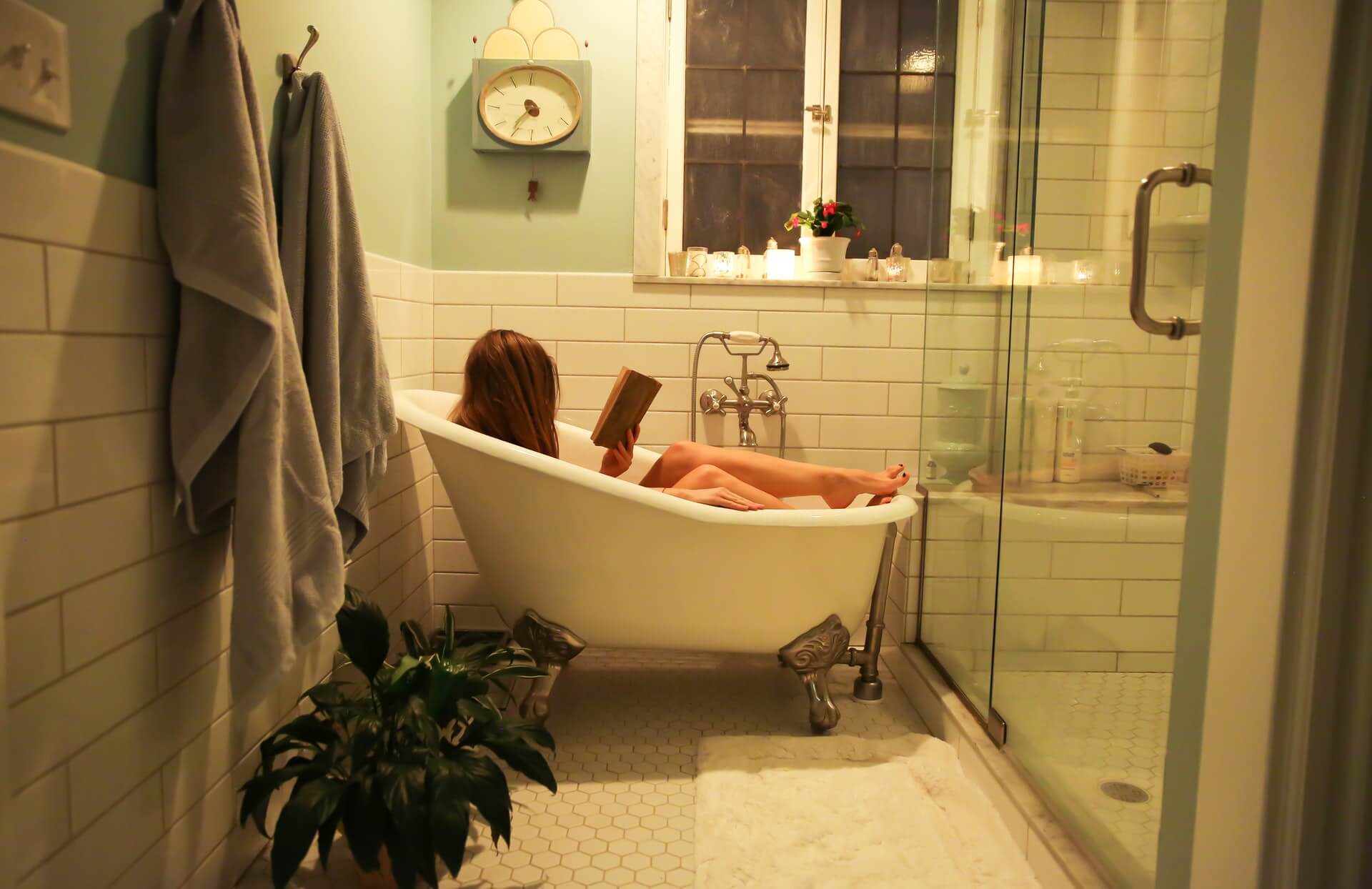
Read, meditate, take a bath or shower, stretch. Or all of the above. Let’s take these in turn.
Reading before bed allows people to unwind and forget about the bustle of the day. Trashy books and fiction is better for this than non-fiction (save those for the morning when you’re most alert). It also helped take people away from the digital screens so helped with melatonin production. If you have to read on a digital device, make it an E-book like a Kindle where there is no backlight. If it’s a tablet, switch that blue filter option on.
Meditating allows people to focus on the present and be mindful. It stops the barrage of thoughts that can plague an attempt to get to sleep.
Stretching and yoga, as long as they aren’t vigorous, relax the body.
Finally, taking a bath or shower around an hour before sleeping was shown to release tense and tired muscles, aiding in Stage 1 of sleep because the body had less work to do itself.
7) If You Can't Sleep, Get Up!
Getting to sleep can be a killer: Gazing at the alarm clock every few minutes, thinking about the next day, worrying about decisions made previously, and so on.
This might sound odd compared with all the other tips to sleep better. But if you can’t sleep, don’t. After around 15-20 minutes, get up and do something. Go back to reading preferably or another activity, and try again later.
When you stay in bed for too many days unable to sleep, your mind starts associating bed with difficulties. It’s not a place you go for slumber anymore, and it will increase your stress levels.
As a side point, try to check your social media and your phone less in the day. Notifications and likes and constant checking actually over stimulant the brain, and it continues to look for that stimulus. Ever gone to bed and then started sporadically, mindlessly checking your phone and you’ll know what I’m talking about.
This is why turning it off at a certain time and taking it out of the bedroom is a powerful habit. Moreover, not using it in bed at any time re-inforces this.

8) Don't Eat Late But Munch That Banana
I’m terrible at eating late, and I learnt in Italy that a good dinner seems to start at 9pm and last 2 hours, 4 courses and end up with you in bed stuffed full of food, wine and a digestivo (like a night cap) to boot. All of which is terrible for your sleep cycle.
Not only can eating late cause melatonin interruption but it also means the body has to focus on digestion. If you’re struggling to sleep and eating late, then try bringing back your mealtimes so you have at least 3 hours between food and sleep.
What you eat also has an effect on your sleep. Turkey, peanut butter and bananas are high in tryptophan which is an amino acid that aids sleep.
So if you’re struggling, have a banana a few hours before you hit the sack!

9) Ditch the Caffeine & Alcohol
In the list of tips to sleep better, this is by far my worst undoing. I’m a coffee drinker and drink day and night – it has no noticeable effect on me so I don’t stop. Some people are definitely affected more by caffeine and alcohol than others but everyone can help their sleep by cutting back.
A normal cup of coffee at home has around 100mg of caffeine. Shop coffees from outlets like Starbucks and Costa can have up to 500mg of caffeine.
A survey by the Journal of Clinical Sleep Medicine in 2013 looked at the effects of giving people 400mg of caffeine to 3 groups – one group directly before bed, one 3 hours before and the last group 6 hours before. You can see their results here.
Short version of results…. They found even giving caffeine 6 hours before had an effect and reduced sleep time by 41 minutes. The control group with no caffeine had a mean latency to sleep of 21minutes (i.e. they fell asleep on average in 21 minutes). However the group that were given caffeine directly before bed took a mean of 56.67 minutes to get to sleep – almost an hour!
One last thought on fluids before bed. If you drink in the hour before sleep, you’re more likely to interrupt your cycle and have to take a trip to the bathroom in the night. Plus, I’m informed that only gets worse with age!
So if in doubt, take a 1-2 hour gap with no fluid intake before you hit the pillow.
10) Go Dark, Quiet & Cool
The last of our tips to sleep better involves environmental design again. Along with good mattresses/pillows and keeping your bedroom for one clear purpose, you should also think about light, noise and temperature.
Sometimes we can’t affect it, and if you’re away on business, at a friend or relatives house, or travelling, many of these pointers can go right out the window.
But if you can, most people sleep better the darker it is. Think about investing in dark curtains, heavy ones or black out blinds. If you’re elsewhere, a facemask can help.
Furthermore, noise can be a particular problem for people and one of the reasons people struggle to sleep on public transport. If you can, thick curtains at the very least will help but double glazing is ideal. There is a natural tendency for the body to adapt to its surroundings – notice for instance how people next to train lines stop hearing the trains consciously. However, the quieter you can make the environment, the better your chances of rustling up a good forty winks of sleep.
Finally, temperature plays a deciding factor. People tend to struggle to sleep if it’s very hot – think about how you toss and turn in hot climates. Most people are proved to sleep best between 18 to 24 degrees Celsius with the ideal often quoted as 20 Celsius (that’s 68 to you Fahrenheit lovers).
If it’s too cold, see if you can regulate your thermostat. If it’s too hot, then open a window and get some fresh air. Air con is the last resort as can be noisy but may be your only hope depending on circumstances.

Are You Asleep Yet?
These tips to sleep better may not send you sleep fast in 5 minutes but they will help you sleep more naturally and hopefully they will help make you sleep better with anxiety. They’ve definitely helped me go from a place where I couldn’t sleep to one where I’m actively seeing benefits (though not at the end of that journey)
If you have any comments or other great tips to sleep better, I’d love to see them below.
Otherwise, happy slumbers and refreshing awakenings!